

The fire did not end the story. Many temples had been destroyed. The great religious network that had once embraced the entire peninsula had been broken.
Yet Rokugo Manzan itself did not disappear. Mountain ascetics continued their training. Monks remained where they could. Villagers quietly cared for the temples that had survived. Even when it could no longer be seen from afar, the flame of faith continued to burn.
A Long Peace Brings New Strength
Then came a different age.
The long peace of the Edo period transformed Japan.
Agriculture became more productive.
Coastal trade flourished.
Villages grew more prosperous.
For the first time in generations, people had enough stability to think not only about survival, but about rebuilding. This time, no medieval estate system stood behind the temples. The rebuilding came from two new directions: from the castle town — and, above all, from the villages.
The Lords Lend a Hand
The first push came from the domain lords. The Kitsuki domain, which governed the peninsula, took Futago-ji under its patronage as a temple of the ruling house, and supported the repair of halls and images. For the lords, Rokugo Manzan was a symbol of peace in their lands and a spiritual anchor for their people.
Notice how the world had changed once more. The lords protected the temples not because they feared divine wrath — that age had burned away in the last chapter — but because shared faith steadied the domain and bound its people together. From awe, to statecraft: the relationship between power and the sacred had taken yet another new shape.
Rebuilt by the Villages
Yet the deeper force came from below.
The temples were rebuilt by local communities.
Village leaders organized the work.
Religious associations known as kō pooled money, labor, and materials.
Carpenters rebuilt temple halls.
Stonemasons repaired stairways.
Bridges crossed mountain streams once again.
One stone at a time, the landscape came back to life.
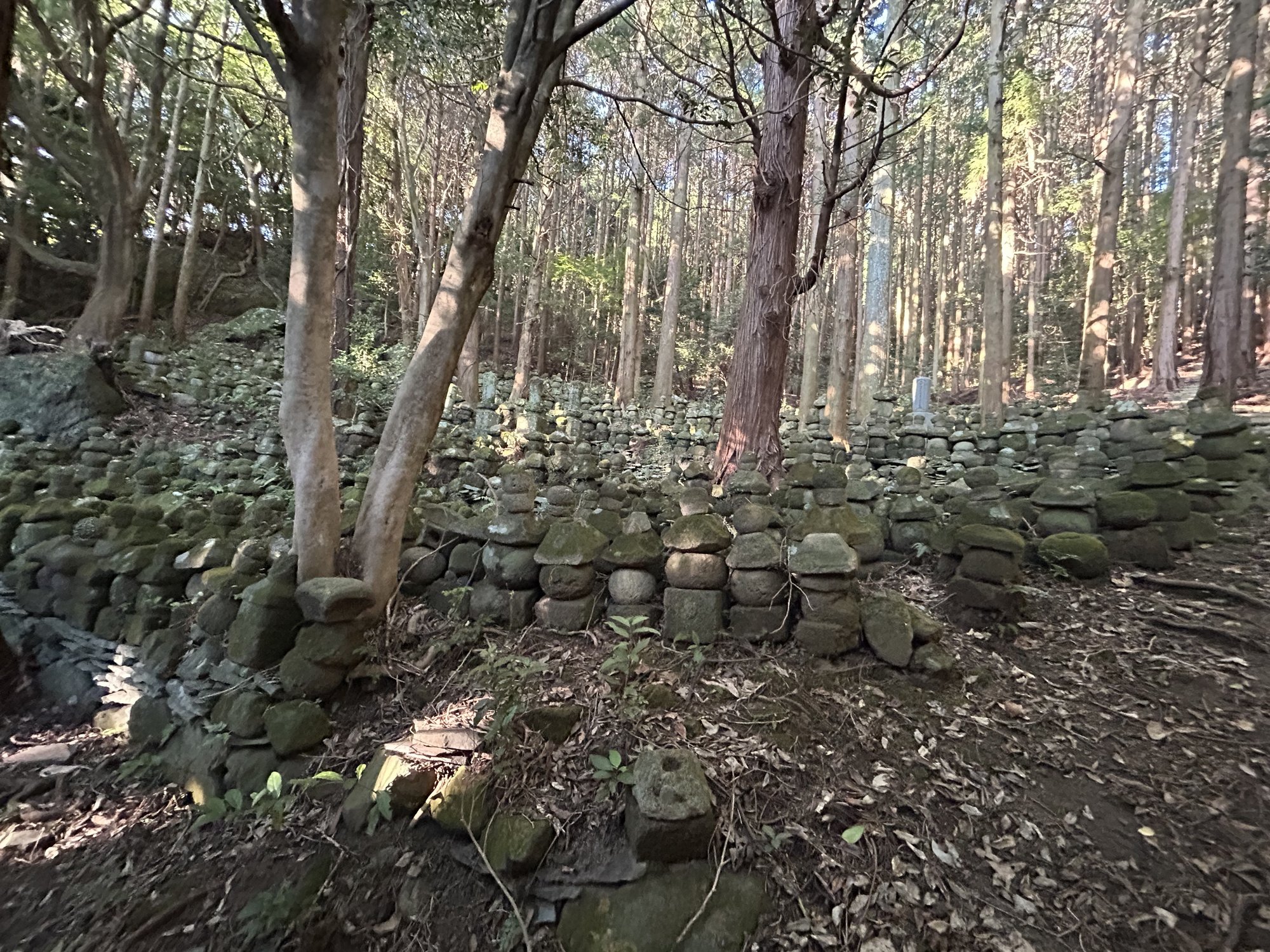
Countless gorintō (five-ring pagodas) fill the valley of Old Sento-ji —
each one the trace of a villager’s donation, accumulated over generations
The temples also changed. Instead of serving a vast medieval religious network supported by landed estates, they became places where local communities gathered, prayed, and celebrated together.
Faith as a Journey
Pilgrimage itself became part of everyday life. Like the great pilgrimages to Ise or Kotohira, journeys to the temples of Kunisaki became both acts of devotion and opportunities to travel beyond one’s own village. Groups of pilgrims climbed the mountains together. They visited temples, offered prayers, shared meals, and carried home sacred amulets and stories.
Faith became something that was experienced together.
The mountains welcomed new visitors as well. Temples such as Futago-ji and Tennen-ji gradually became easier to reach. Ancient places of ascetic training remained sacred, but paths were improved, halls rebuilt, and festivals opened to ordinary worshippers. What had once been hidden among the mountains became part of the shared life of the peninsula.
A Bridge Becomes a Symbol
Even places once known only to mountain ascetics gained new meaning. The Mumyō Bridge, built high between narrow ridges, had long been a place of severe spiritual training. Over time, it also became a symbol of Rokugo Manzan itself. Visitors no longer saw only a bridge. They saw the determination of the people who had built it—and the faith that had kept the tradition alive.
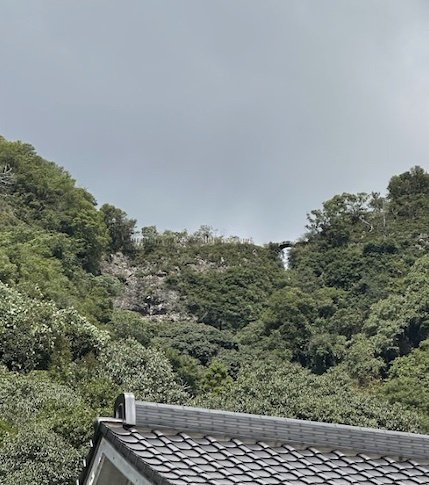
The Mumyō Bridge at Tennen-ji — once a hidden training ground of ascetics,
later a landmark of Rokugo Manzan’s revival
Reinvented, Not Restored
The old system had not been restored. It had been reinvented. Once, the temples had been supported by medieval estates. Now they were sustained by villages, pilgrims, festivals, and the people who returned year after year.
The form had changed. The spirit had not.
Many of the landscapes visitors admire today were shaped during this period. The stone Buddhas are ancient. The mountains are timeless. But the pilgrimage paths, village traditions, festivals, and much of the living culture surrounding them grew into their present form during the centuries of rebuilding.
Rokugo Manzan survived because each generation found its own way to continue the story.
Written by Countless Hands
Today, flowers are still placed before the stone Buddhas.
Temple roofs are still repaired.
Pilgrims still climb the mountains.
Not because the Middle Ages somehow survived. But because generation after generation chose to keep this landscape alive.
When much of that world was lost, ordinary people quietly began again.
The story of Kunisaki was never written by emperors alone.
It was written by monks.
By stonemasons.
By farmers.
By pilgrims.
By countless people whose names are now forgotten.
Perhaps that is why this peninsula still feels alive today. Its story was never finished. It is simply waiting for the next traveler to continue reading it.
Worth a Visit: The Valley Where This Chapter Still Lives — Tennen-ji and Nagaiwaya
The kō associations, the opened sanctuaries, the festivals meant to be seen, the Mumyō Bridge — everything this chapter described can be visited in a single valley: Nagaiwaya, in the mountains of Bungotakada.
At the valley’s heart stands Tennen-ji (site in Japanese), one of the core training temples of Rokugo Manzan, still keeping its flame in a modest lecture hall beside the river. This is the very hall where Shujō Onie — the demon rite we met two chapters ago — is performed every year on the seventh night of the old lunar New Year. Sparks fly from the torches, and the hall fills with villagers and visitors.
Shujō Onie at Tennen-ji — torchlight fills the temple grounds (video, with sound)
Next door, the Oni-e no Sato museum lets you experience the rite on screen, beside Buddhist statues designated Important Cultural Properties. The local wisdom that preserved a festival by showing it is still at work today.
In the river before the temple, three figures are carved into a midstream boulder: the Kawanaka Fudō, cut — tradition says — around the Muromachi period to calm the river’s floods. A prayer for everyday safety, written directly onto the rock.
Look up behind the temple and jagged rock spires rise against the sky: the Tennen-ji crags, a National Place of Scenic Beauty. Spanning a gap high on that ridge is the Mumyō Bridge from the photograph above. Even seen from below, it tells you everything about the nerve of the masons who built it — and the world of the ascetics who crossed it.
A short drive away, in the neighboring Ebisu valley, lies Nakayama Senkyō, a ridge trail through the crags, walked with the help of chains, where the ascetics once trained — with a Mumyō Bridge of its own. The landscape of the ascetics’ network we met earlier in this story survives here more densely than anywhere else on the peninsula.
Send a comment
Comments are not published on this page. They go directly to the site owner.