

“Wait… you’re starting with geology?”
Fair question.
If we’re going to understand the history of the Kunisaki Peninsula, this is exactly where we need to begin.
The cliffs where Buddhist images were carved…
the rugged ridges walked by mountain ascetics…
the rocky ledges believed to be the dwelling places of gods…
even the stone bridges, terraces, and temple pathways built by generations of villagers —— all of them exist because of volcanic eruptions that happened millions of years ago.
The Volcanic Backbone
About three million years ago, while our distant human ancestors were still evolving in Africa, volcanoes began rising here in what is now northeastern Kyushu. Their eruptions continued for nearly a million years before finally coming to an end. Today the volcanoes are long extinct, but they left behind something far more enduring than lava. Deep underground, enormous bodies of granite slowly cooled and hardened. Over millions of years, wind, rain, and changing sea levels carved those rocks into the landscape we see today.
The mountains here are not especially high—most are under 700 meters—but they are remarkably rugged. Sharp ridges radiate outward from the peninsula’s center, separated by narrow valleys that open into fertile alluvial fans before reaching the sea.
Guarded by Mountains, Open to the Sea
Geography would shape Kunisaki’s future just as much as geology.
The peninsula projects into the calm waters of the Seto Inland Sea. To the west lies northern Kyushu, while across the sea are the Korean Peninsula and the Asian continent.
Although surrounded by mountains, Kunisaki was never isolated. Ideas, technologies, religions, and people arriving from the continent entered northern Kyushu and spread eastward through the Inland Sea. Kunisaki stood directly along those maritime routes, becoming one of the places where outside influences met local traditions. Centuries later, this would help give birth to one of Japan’s most distinctive religious cultures.
Small Worlds in the Valleys
But the coastline tells only half the story. Inside the peninsula, the landscape naturally divides itself into dozens of small valleys. Each valley contains enough farmland to support a modest community, while the surrounding ridges provide timber, fresh water, and a degree of natural protection. The sea offers fish. The mountains offer resources. The fields provide food. Each community could remain largely self-sufficient while still maintaining connections with its neighbors.
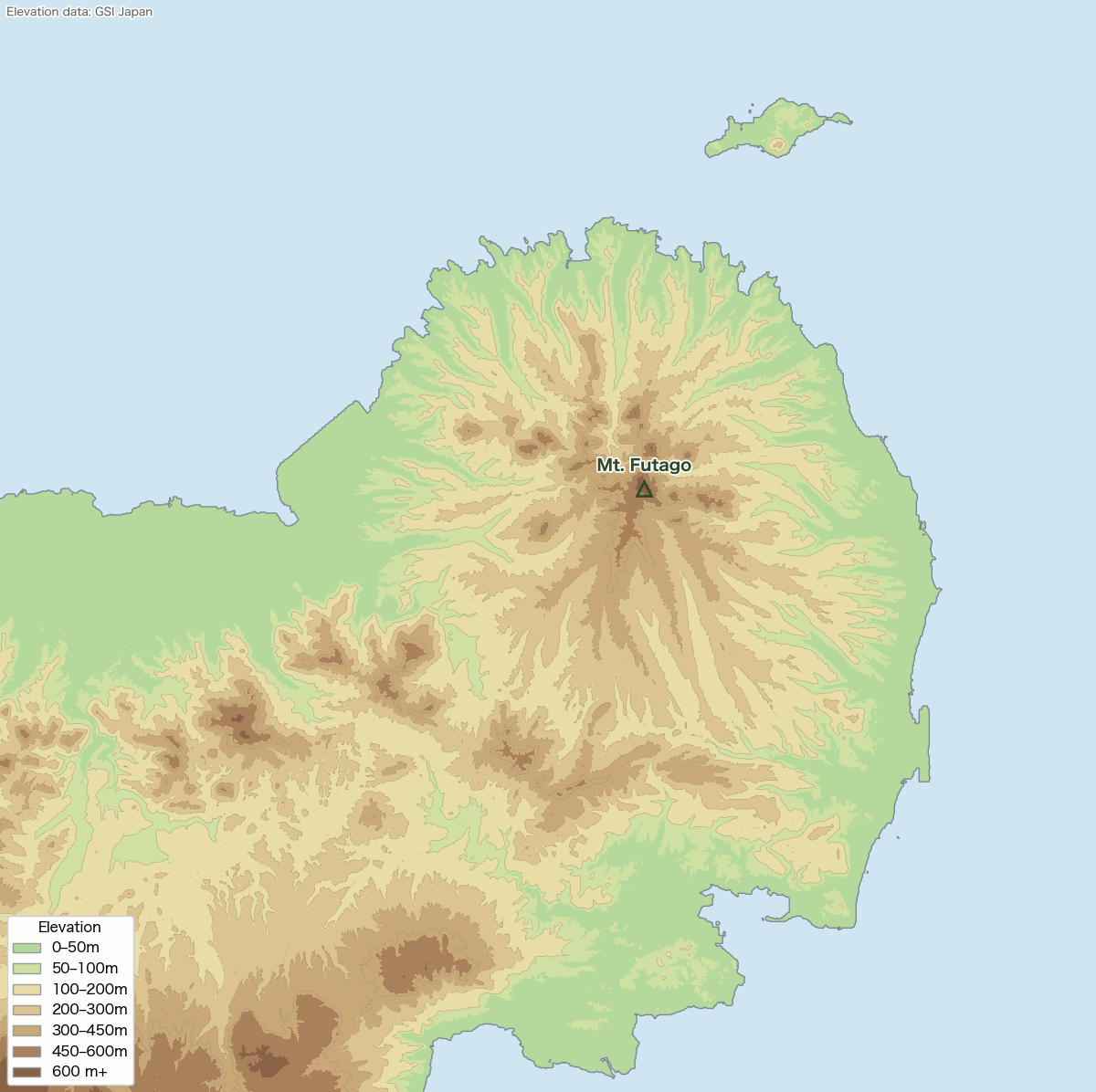
Ridges and valleys radiate from Mt. Futago down to the sea
(Elevation data: GSI Japan / click to enlarge)
Seen from above, the peninsula resembles a network rather than a single center—a collection of small worlds linked by mountain paths and coastal routes. Long before anyone imagined the religious network later known as Rokugo Manzan, the land itself had already prepared the stage.
Perhaps that is no coincidence. Sometimes geography writes the first chapter of history.
Walk Kunisaki, and the Stones Speak to You
Walking the Kunisaki Peninsula, you meet stone everywhere you go.
The long stone stairways leading up to mountain temples, the stone walls that ring the villages, the stone terracing that holds up the fields, the embankments lining the waterways, the roadside stone Jizō and Kōshin steles. Moss-covered stone lanterns and torii gates, stone bridges, old five-ring pagodas and pilgrimage memorial steles. Head into the mountains and rock caves appear, along with cliff Buddhas (magaibutsu) carved into the rock faces, and the scenery of the rock peaks and yaba where the rock itself became a place of training.
These are not special historic sites but the everyday scenery of this land. The stone born of volcanic activity millions of years ago has supported people’s lives, supported their prayers, and shaped the very culture of this peninsula.
When you walk through Kunisaki, if you turn your eyes to the stones along the road as well, each and every one of them should quietly speak to you of this land’s long history.
1. Rock Caves (Iwaya)
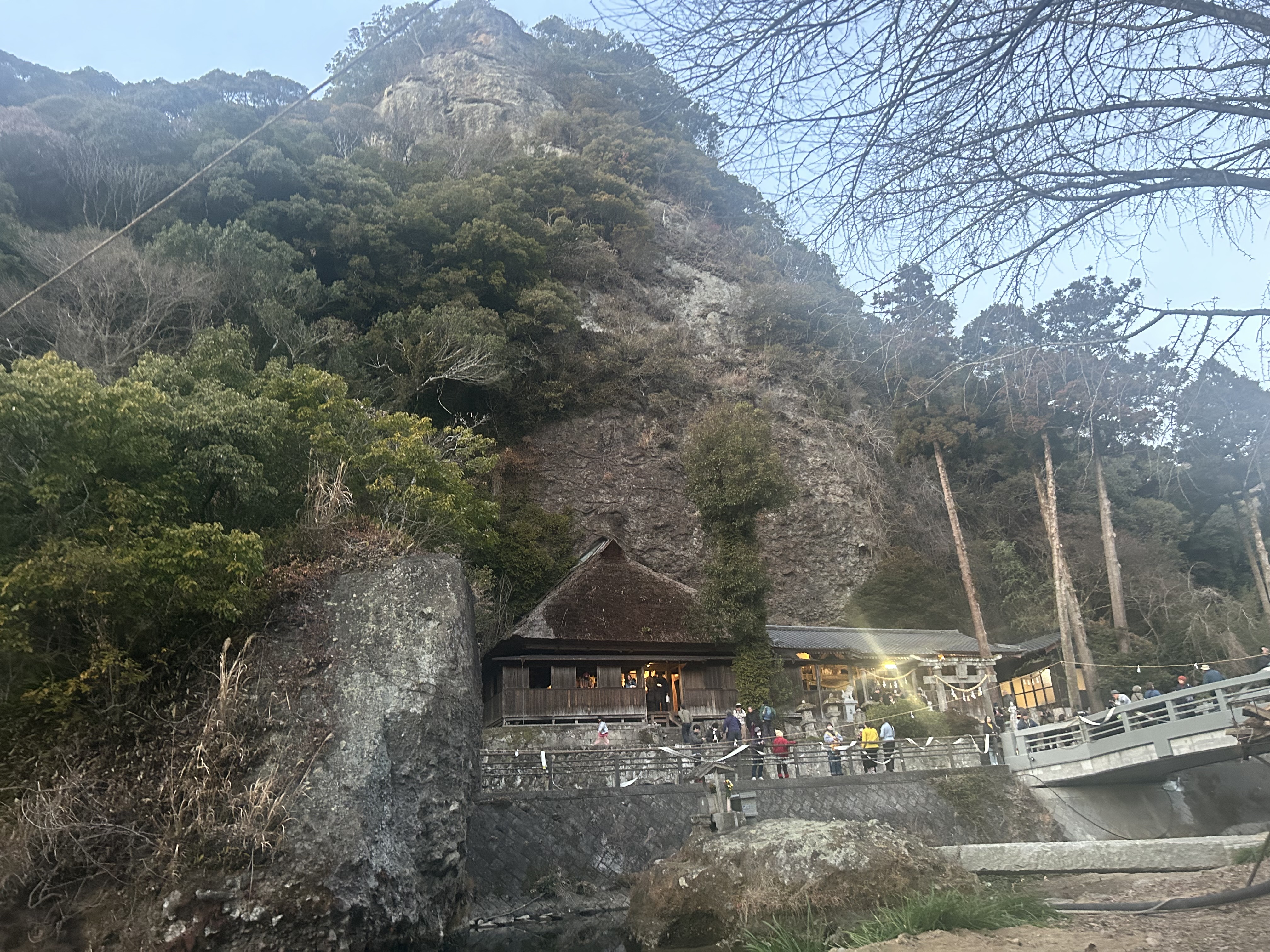
In Kunisaki, the rock itself was a place of training and a place of prayer. Natural rock caves and cliffs became the inner sanctuaries where ascetics secluded themselves to train — special spaces that sustained the faith of Rokugo Manzan. At Iwatoji, Futagoji, and Old Sentōji — the higher you climb the steep mountain path toward the inner sanctuary of Old Sentōji, the more vividly you sense the world of prayer the ascetics sought. The Mumyō Bridge at Tennenji, a narrow stone bridge spanning a cliff, is the final hardship on the way to the inner sanctuary, a place that symbolizes the severity of ascetic training. In Kunisaki, temples are not only buildings. The mountains and the rocks themselves became objects of faith, and people found the world of the Buddha within nature.
2. Yaba (Rugged Rock Peaks)
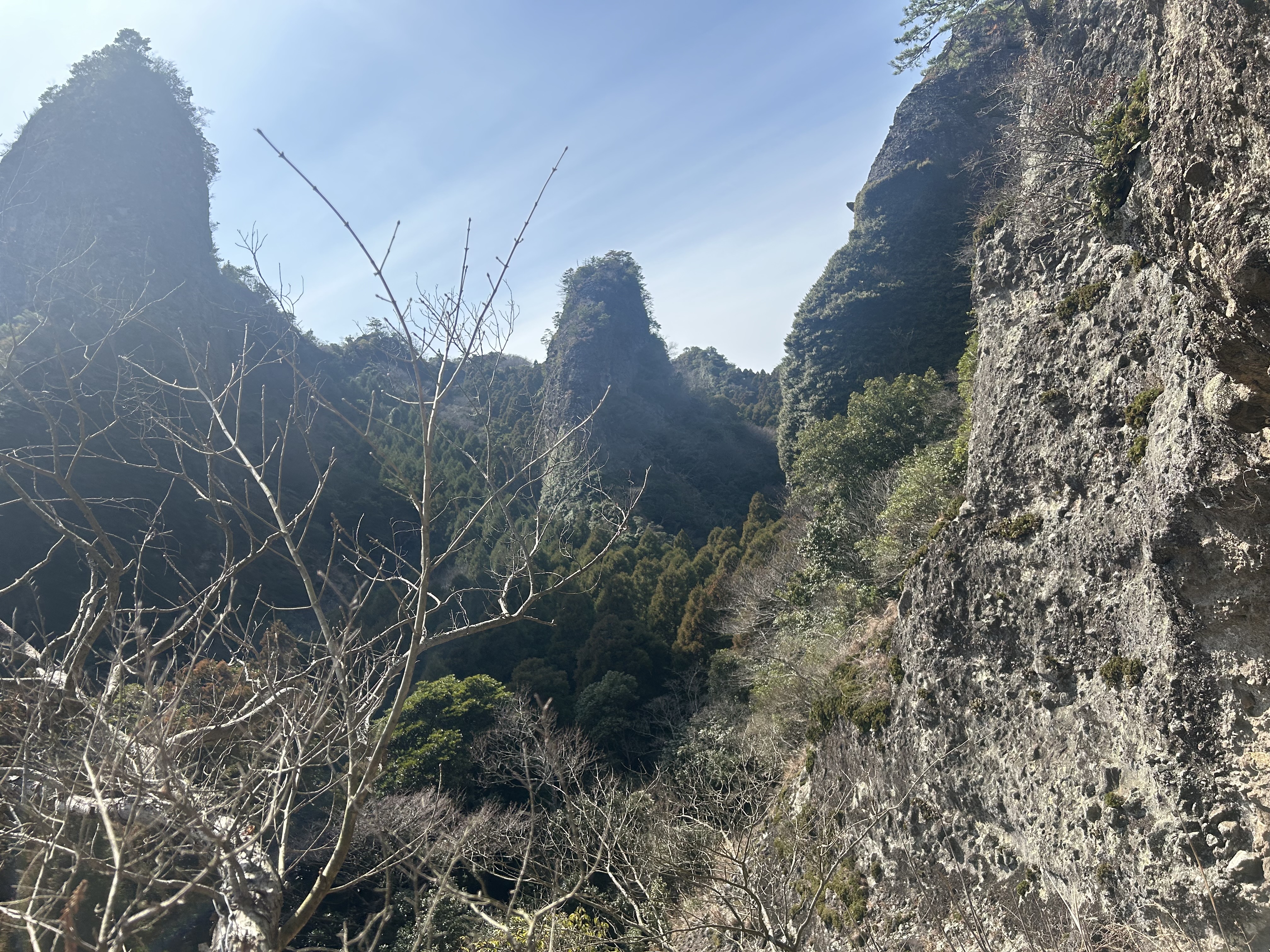
”Yaba” is an old word for a landscape woven from sheer rock peaks and strangely shaped crags. Across the Kunisaki Peninsula, too, spread scenes worthy of the name “yaba.” Futagoji and Mount Futago, Mount Monju and Monjusenji, Mount Sentō and Old Sentōji, Nakayama Senkyō and Tennenji — ranges of jagged crags and ancient temples become one, creating the mountain-worship scenery that represents Kunisaki. Here people found the world of the Buddha in the rock peaks, and nurtured their prayers together with that scenery. The stone culture lives not only in stone Buddhas and pagodas but in the very form of the mountains themselves.
3. Stone Buddhas and Cliff Buddhas (Magaibutsu)
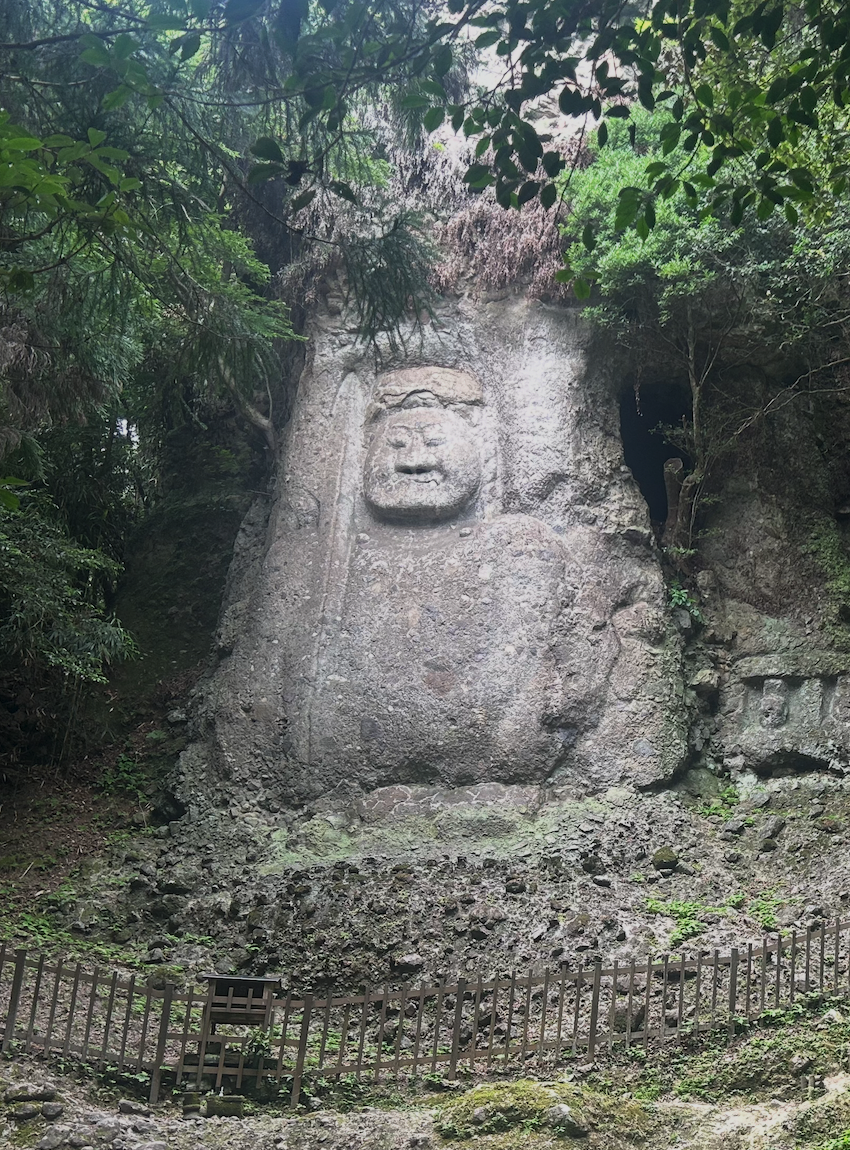
Stone Buddhas and cliff-carved Buddhas (magaibutsu) are among the stone cultures that best represent Kunisaki. The faith of carving a Buddha directly into the rock itself still lives on all across the peninsula. The Kumano Magaibutsu are among the largest cliff Buddhas in Japan; a colossal Fudō Myōō and Dainichi Nyorai overwhelm all who come. At Maki Ōdō, precious Buddhist images once scattered among the temples have been gathered together, conveying this region’s Buddhist culture to the present day. The Kawanaka Fudō is a Fudō Myōō carved into a rock in the midst of a river’s flow — a quintessentially Kunisaki scene where nature and faith become one. At the Itsutsuji Fudō, you can feel the world of the mountain ascetics who trained again and again among these rugged peaks.
4. Stone Niō Guardian Statues
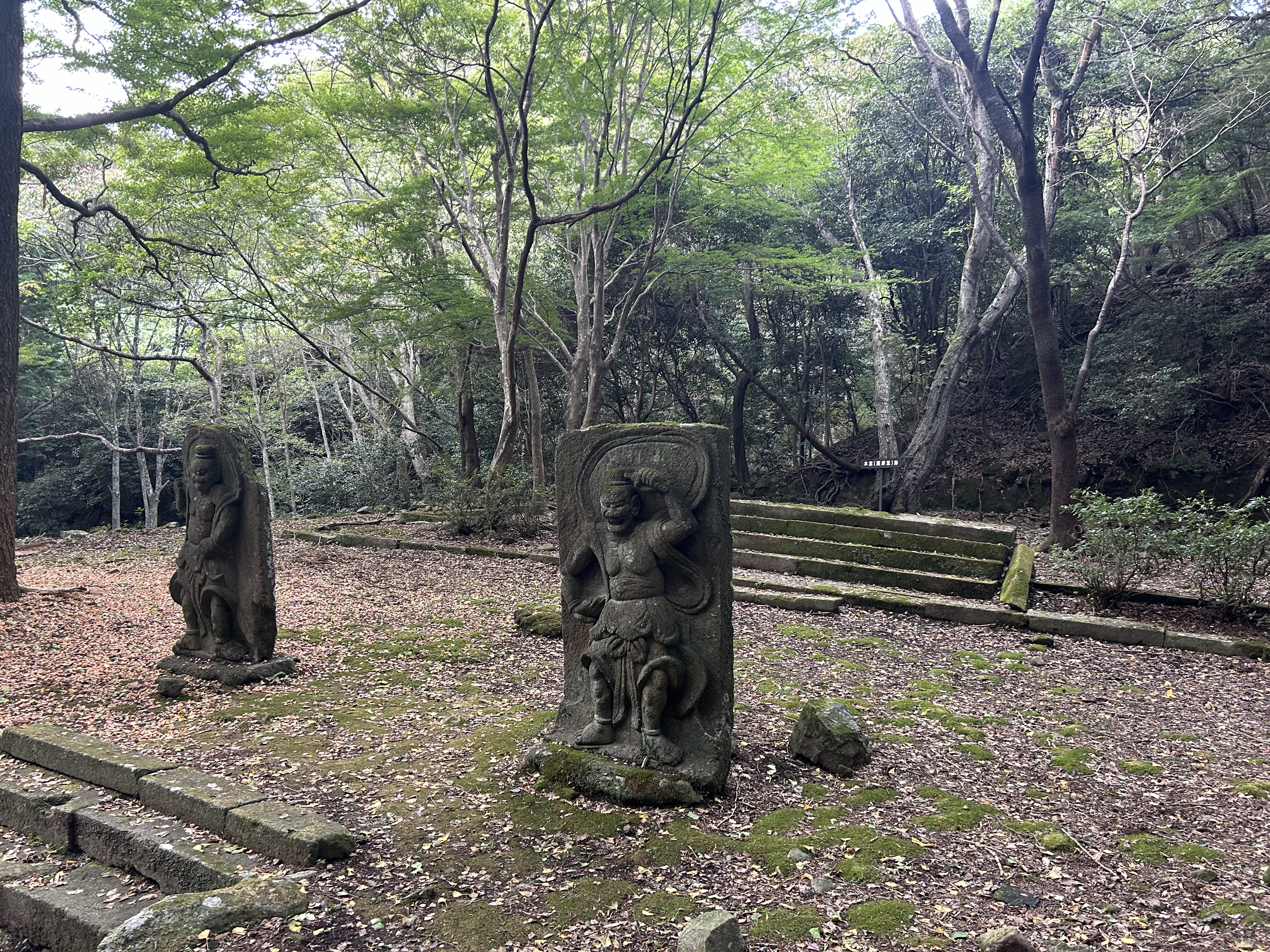
The Niō guardians that glare sharply at a temple’s mountain gate — in Kunisaki, almost all of them are carved in stone. The stone brought forth by the volcanoes, together with the skill of the people who carved it, creates scenery found only on this peninsula. The Niō of Futagoji welcome worshippers with their imposing physiques, while the Niō of Iwatoji give off the solemn air befitting a mountain temple. At the ruins of Old Sentōji, they convey to this day the history of the lost halls of a once-flourishing temple.
5. Kunisaki Pagodas (Kunisaki-tō)
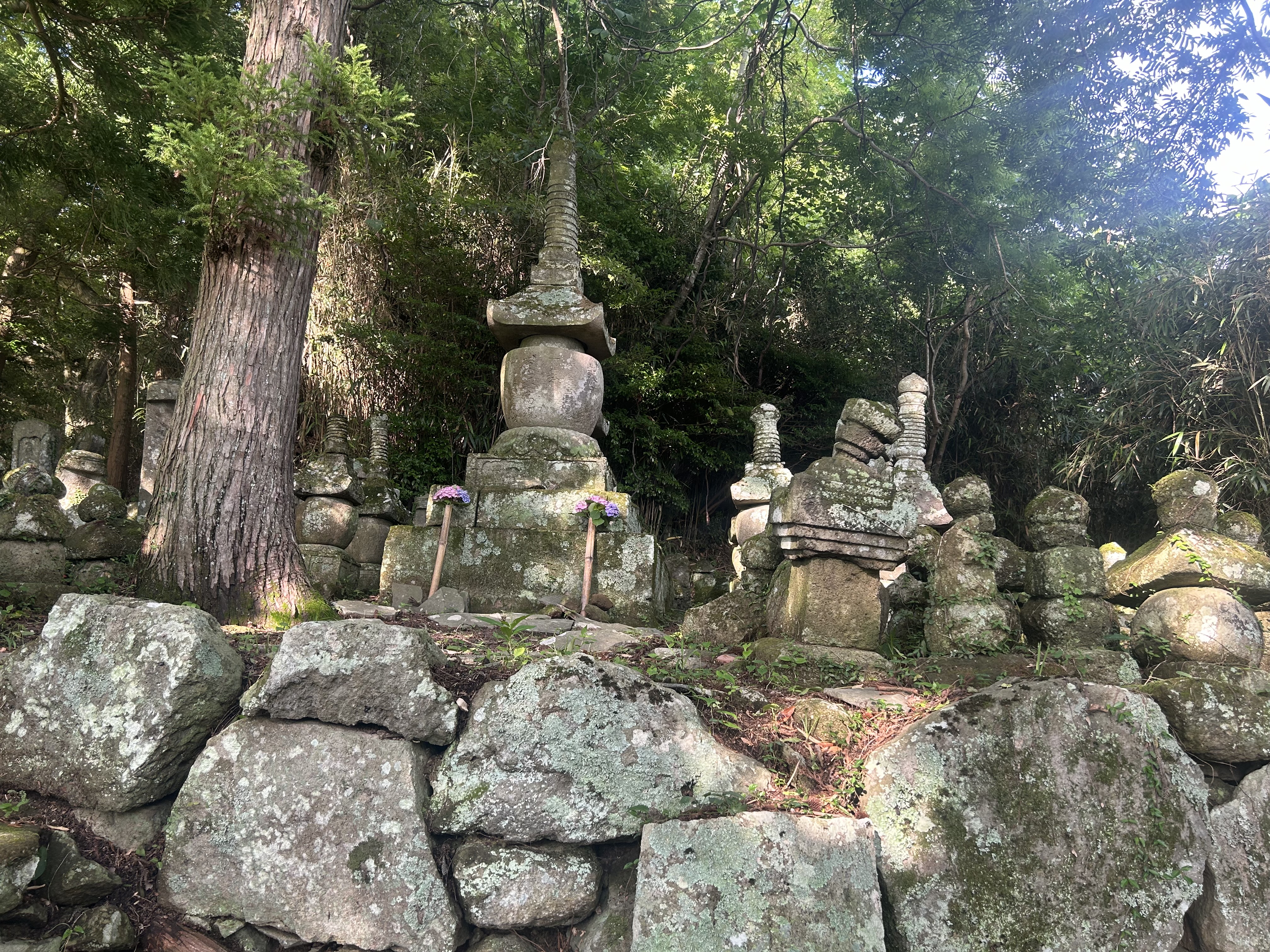
The Kunisaki-tō is a distinctive stone pagoda representative of this land, with a softly curving canopy and a base evoking a lotus pedestal. At Iwatoji, Senpukuji, and Futagoji remain pagodas known as prime examples of the Kunisaki-tō. A stone pagoda also survives at the Iwashimizu Bekkū, quietly telling how deeply the faith of shinbutsu-shūgō — the fusion of gods and Buddhas — once lived in this land.
6. Five-Ring Pagodas (Gorintō)
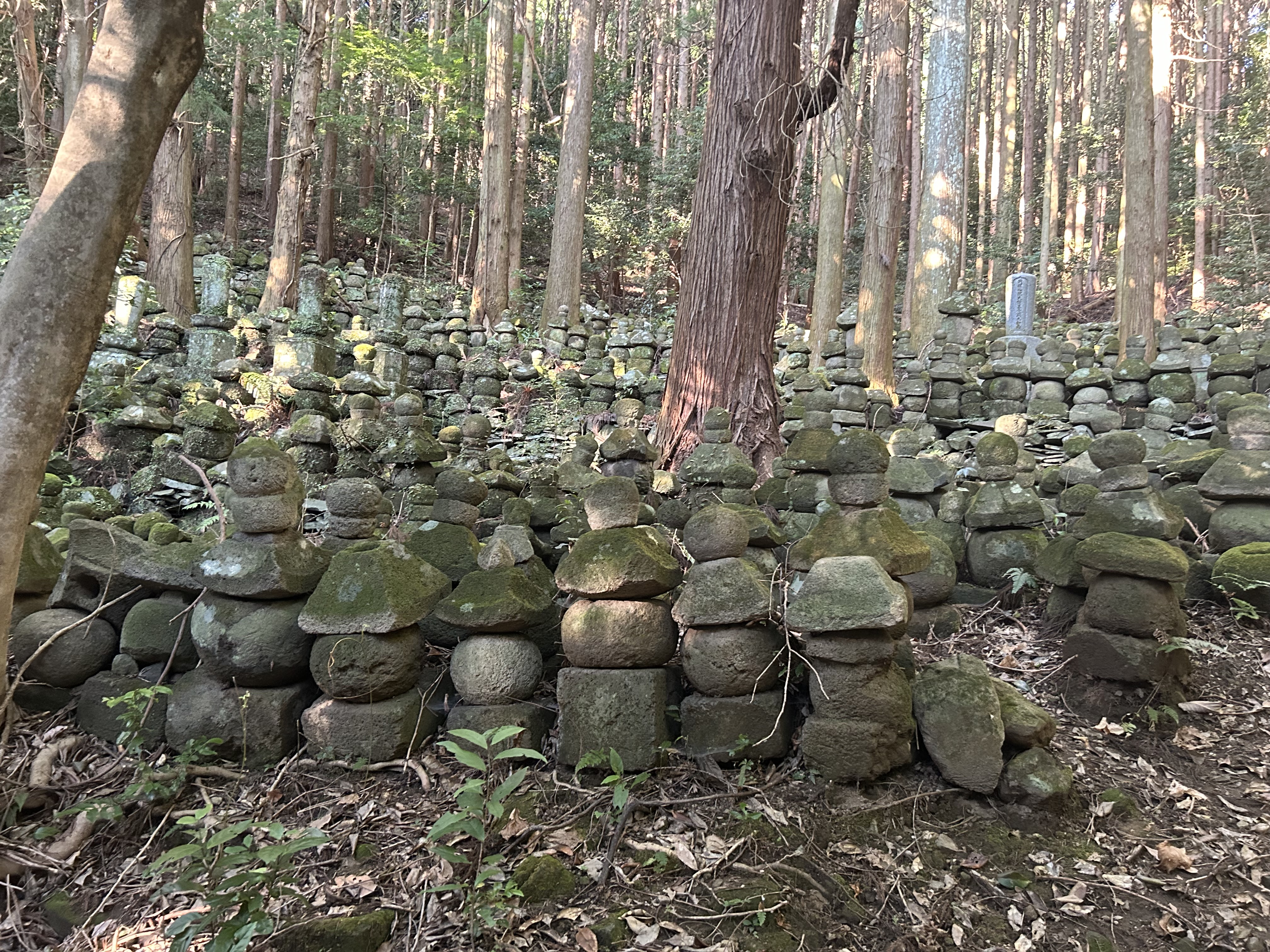
The gorintō is a stone pagoda based on the Buddhist idea of representing the universe through five elements — earth, water, fire, wind, and void. Many were built in Kunisaki from medieval times, and they still stand quietly at temple ruins, along old pilgrimage routes, and beside ancient training paths in the mountains. None is especially large, but on stone surfaces weathered by long years is engraved the history of the people who once offered their prayers here. In Kunisaki you may come upon a gorintō unexpectedly, not only within temple grounds but on a remote mountain path. That, too, is one of the scenes that tell how the faith of Rokugo Manzan spread across the whole peninsula.
7. Kōshin Steles and Pilgrimage Memorial Steles
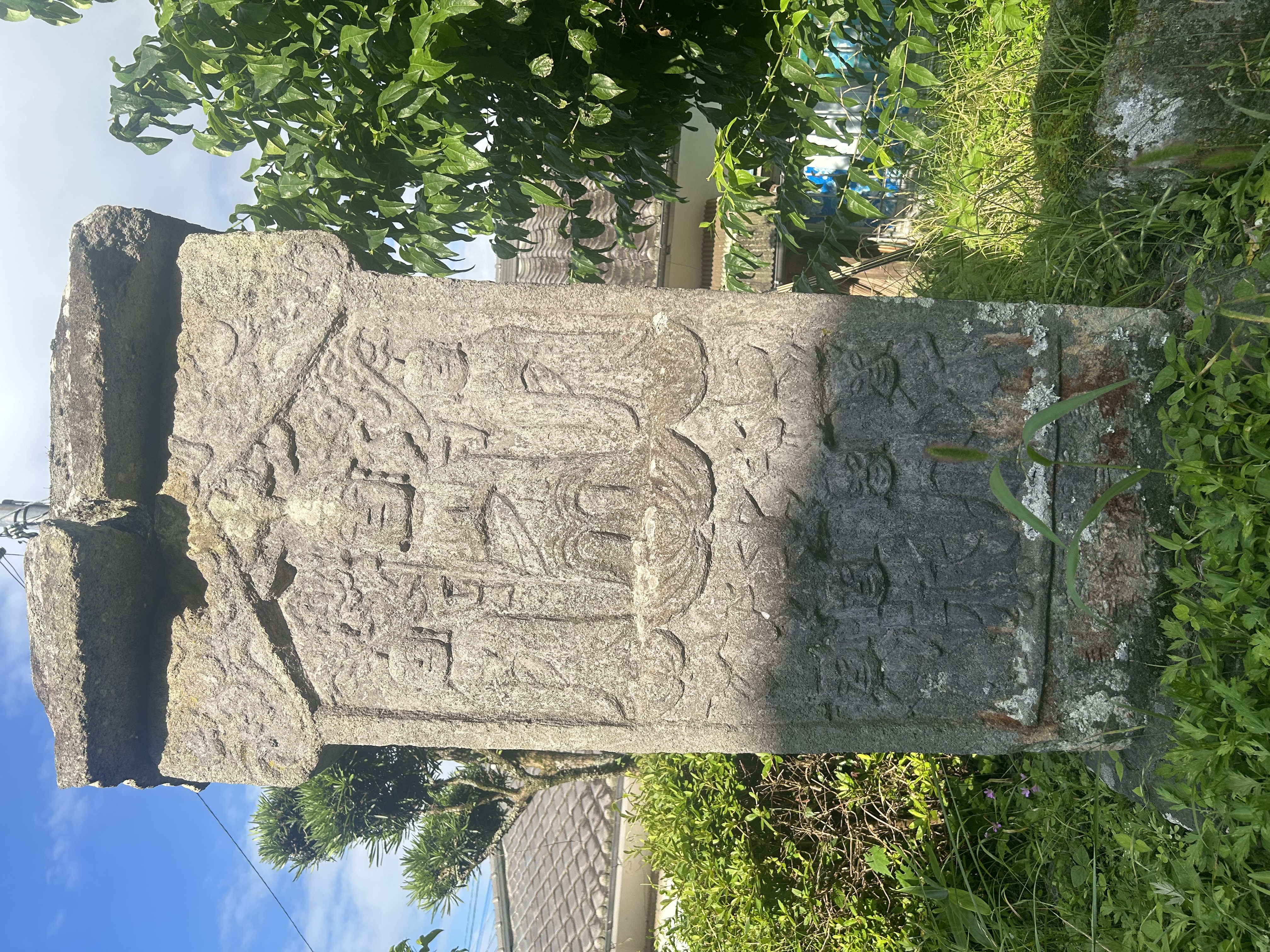
In the Edo period, stone monuments imbued with the villagers’ faith and wishes — Kōshin steles (kōshintō), pilgrimage memorial steles (kaikoku kuyō-tō), and the like — came to be raised in many places. Kōshin steles remain in abundance at village entrances and along roadsides, conveying prayers close to village life: for people’s health, for the safety of the household, and for warding off misfortune. Pilgrimage memorial steles were raised to commemorate pilgrimages through the provinces and in hope of their merit. These roadside monuments convey a stone culture rooted in the everyday life of the villagers.
8. Stone Bridges, Pavements, and Steps
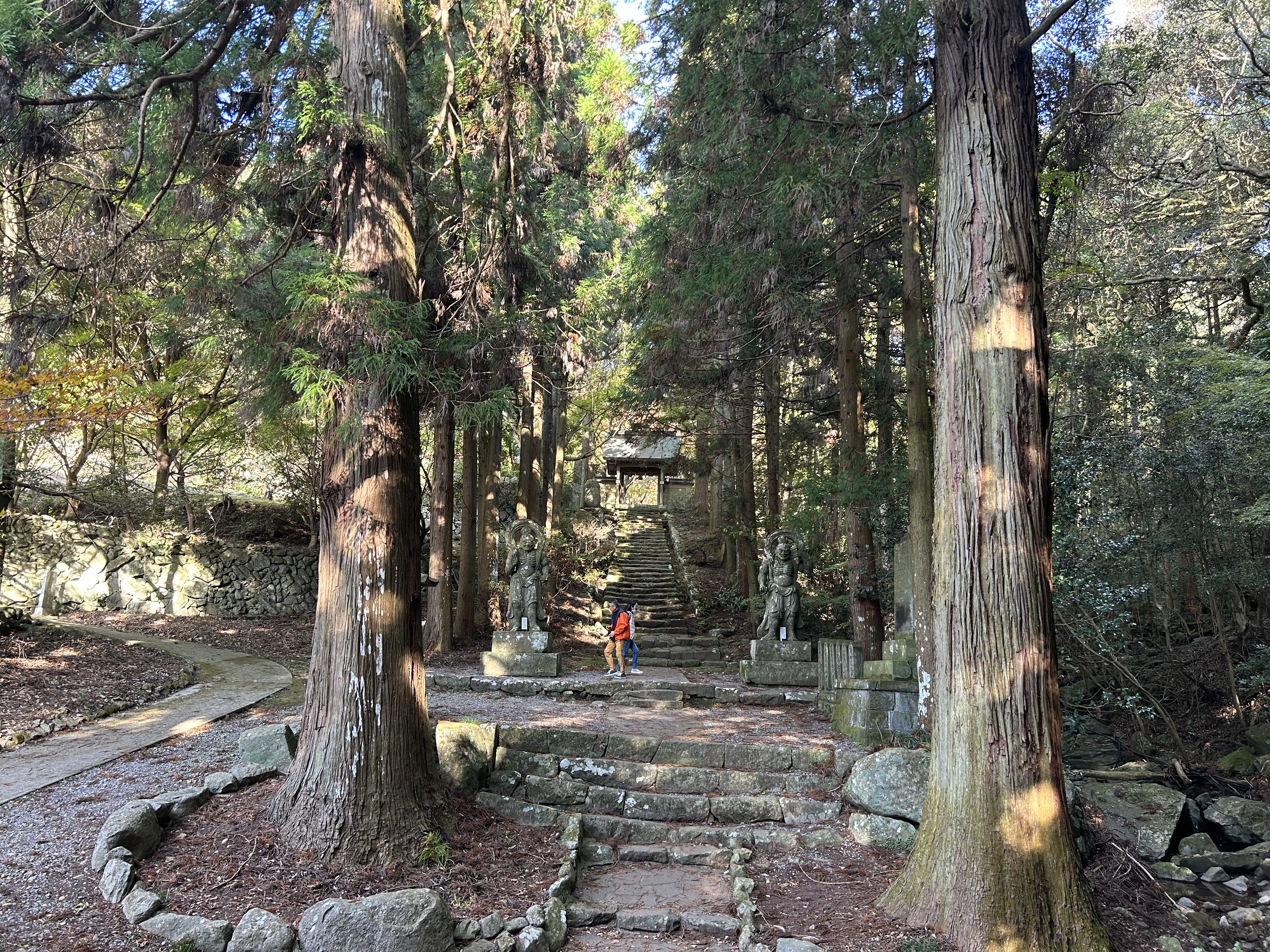
Stone was used not only for Buddhist images and pagodas but also for building the paths by which people walked the mountains toward places of prayer. In Kunisaki, stone bridges, stone steps, and stone pavements together supported the ways of the mountain ascetics. Long stone stairways lead up to the temples, stone pavements make steep mountain trails easier to walk, and small stone bridges were built to cross valleys and streams. None is showy architecture, but all are precious works of civil engineering that have long sustained countless ascetics and pilgrims. Even today, walking through Kunisaki, stone steps and bridges laid centuries ago are used as a matter of course. It tells how, on this peninsula, stone has supported both daily life and faith.
Send a comment
Comments are not published on this page. They go directly to the site owner.